Frequently Asked Questions
Everything You Need to Know
Have questions about our organic approach, service areas, or billing? Find the answers you need below, or give us a call!
Our Organic Methods
Why choose organic?
We believe great lawns start with natural solutions. Here is how our approach differs from traditional chemical treatments.
How often do I need to fertilize my lawn?
Lawns get the best results when fertilized every five to seven weeks in the cooler seasons and six to eight weeks in the hotter seasons.
Why should I winterize my lawn?
The benefits of a good winterizer are not immediately apparent. However, it is considered to be the most important application of the year. Even though the lawn stops growing over the winter, the root system does the majority of its development during that time. The key to a thick healthy turf is a strong root system, and that starts with a good winterizer.
Are your treatments safe for pets and children?
Yes! Our organic treatments avoid harsh synthetic chemicals, making your yard safe for the whole family as soon as we finish applying them.
When can my kids & pets go back on the lawn?
There are no restrictions for kids and pets after a fertilizer application. Weed control is liquid, and should be dry before entering the lawn (30 min. or less on hot days). Remember that Forever Green "spot treats" weeds, meaning that we treat only the visible weeds, not necessarily the entire lawn. Customers who have been with Forever Green for multiple seasons have very few weeds, thus they need very little weed control.
How long does it take to see results?
While synthetic fertilizers offer a quick visual fix that fades fast, our soil-building practices create deep, lasting health. You'll notice a thicker, more resilient lawn over the first few months of consistent care.
Are organic fertilizers as effective as synthetic ones?
Absolutely. In fact, they are better for long-term health. Instead of feeding just the grass blades, organic fertilizers feed the soil microbiome, which naturally fortifies the grass against disease and drought.
Will an organic lawn require more watering?
No, it often requires less! Organic practices improve soil structure and root depth, allowing the soil to retain moisture much more efficiently than chemically treated dirt.
Do you use any chemicals for weed control?
Our primary weed control strategy is preventative: growing thick, healthy grass that naturally chokes out weeds. When spot treatments are necessary, we use the most eco-friendly and responsible methods available.
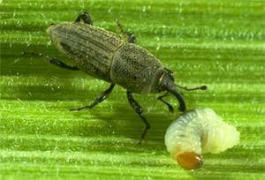
What do billbugs look like?
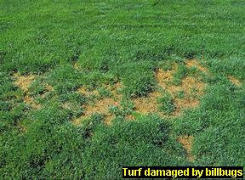
What do billbugs do to my lawn?
Billbug larvae eat the root system of many species of lawn. This root eating action along with 90- to 100-degree days will severely damage a lawn.
How do I control billbugs?
If your lawn is susceptible to billbugs, you have two options for control. The first is to put a preventative application down before the billbug activity is high. If you have missed this window and already have billbugs in the lawn, a post emergent billbug application will be necessary, followed by overseeding in the fall to replenish the damaged areas.
Services & Scheduling
Managing your lawn care plan
Do you offer commercial services?
Yes, we provide full-service landscape maintenance for both residential and commercial properties.
When do you do sprinkler blowouts?
We start sprinkler blowouts in late October, early November. If you have an above ground backflow and are concerned with it freezing, we recommend covering it in an old blanket or sleeping bag. The first hard freeze should not affect pipes.
Do I need to be home for my scheduled service?
No, you do not need to be home. We just ask that gates are unlocked and any pets are safely secured indoors during our visit.
How tall should I cut my grass?
The first and last mowings of the season should be the shortest (2"-2.5"). Shorter lawns during the winter will have fewer chances for snow mold and harsh winter kill. The height should be increased (3"-3.5") as the temperatures increase. A longer grass blade will hold moisture and prevent weeds. These heights also pertain to line trimming the edges; short edges lead to crabgrass.
How often should I mow?
The lawn should be mowed at least once a week with blades sharpened several times per season. If you prefer mulching, every five days to twice a week works the best.
What happens if it rains on my scheduled service day?
We stay informed of local weather developments as they happen. If heavy rain or extreme conditions make it unsafe or detrimental to service your lawn, we will promptly notify you and reschedule for the next available clear day.
Location & Operations
Where we work
What areas do you serve?
We proudly serve Boise, Caldwell, Eagle, Garden City, Middleton, Nampa, and Star.
What are your office hours?
Our office is open Monday to Friday, 8:00 am to 4:30 pm.
Do you offer free estimates?
Yes! We offer free, no-obligation quotes for all of our maintenance, design, and specialty services.
How does billing work?
We aim to make billing as easy as possible. We provide regular invoicing and accept multiple forms of payment, including major credit cards.
Are you licensed and insured?
Yes, Forever Green is fully licensed and insured in the state of Idaho. Your property is protected when our team is on site.
Let’s build a healthier, greener lawn together.
Ready to Experience the Organic Difference?
Contact our Boise-based team today for a free estimate. Discover how our natural soil-building practices can transform your outdoor space into a vibrant, resilient landscape without relying on harsh chemicals.